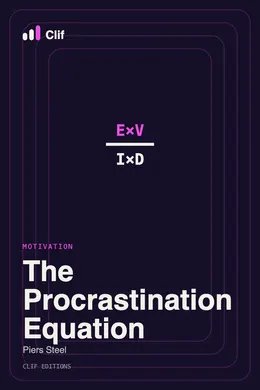
The Procrastination Equation
Piers Steel · 2010
The Procrastination Equation (2010) is a book by Piers Steel on Procrastination. Motivation researcher Piers Steel distills decades of studies into one equation: procrastination takes hold when expectancy and value are low while impulsiveness and delay are high. He shows how to diagnose and repair each variable.
A science-backed way to see why we delay, and a toolkit aimed at the specific weak spot holding you back.
Three of the ideas you’ll keep
The Clif summary of The Procrastination Equation pulls out 7 insights. Here are the first three.
- Procrastination is voluntarily delaying an intended action despite expecting to be worse off for it. That built-in irrationality is why it isn't the same as laziness. Lazy people don't care; procrastinators care and stall anyway.
- Steel's Temporal Motivation Theory reduces the whole problem to one formula: Motivation = (Expectancy × Value) ÷ (Impulsiveness × Delay). Motivation collapses when the top shrinks or the bottom grows, so every fix targets one of four dials.
- Of the four variables, Steel's research points to impulsiveness as the strongest single predictor of who procrastinates. It's why the same distant deadline paralyzes an impulsive person and barely fazes a self-disciplined one.
The other 4 — and the full 11-minute summary — are in the app.
What’s inside: 9 chapters
The whole summary runs about 11 minutes, read or listened to.
- The Procrastination Epidemic
- Why Procrastination Isn't Laziness
- The Equation That Explains It All
- Expectancy: The Confidence Problem
- Value: The Boredom and Dread Problem
- Impulsiveness and Delay: The Real Culprits
- The Ancient Brain Behind the Delay
- Rebuilding Expectancy and Value
- Beating Impulsiveness with Precommitment
Finish The Procrastination Equation tonight.
Read or listen to the full summary in about 11 minutes, then keep the ideas with a minute of review a day. Start with the 2-minute quiz — no card required.
More on Procrastination
-
 The War of Art Steven Pressfield A cult favorite on naming and defeating 'Resistance' to do your most important creative work.
 -
 The Now Habit Neil Fiore A classic psychological program for overcoming procrastination through guilt-free scheduling.
 -
 The 5 Second Rule Mel Robbins A five-second countdown is the smallest possible tool for the biggest possible problem: the gap between knowing what to do and…
 -
 As a Man Thinketh James Allen A century before "mindset" became a buzzword, this tiny book argued that character, circumstance, and even the body are the…
 -
 Atomic Habits James Clear The definitive modern playbook for building habits via tiny, compounding 1% systems.
 -
 Better Than Before Gretchen Rubin Rubin's core move is anti-guru: there's no universal habit rule, so before any tactic you diagnose your own nature, and then the…